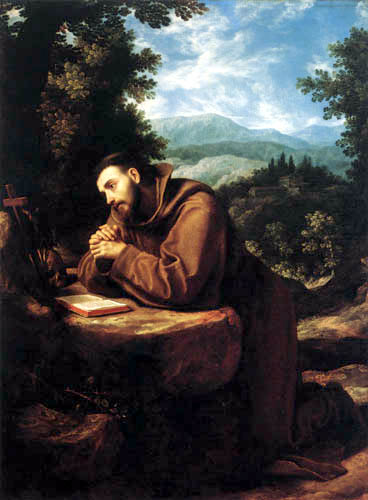
In an age defined by relentless noise, digital intrusion, and the crumbling of outward traditional social structures, the soul often feels a profound ache for ‘the desert’. We look to the Great Solitaries—St. Paul the First Hermit, St. Anthony of Egypt, and St. Mary of Egypt — as beacons of a vocation that remains as vital today as it was in the fourth century.
Being a Catholic hermit is not a “retirement” from reality; it is a frontal assault on the powers of darkness through prayer, penance, and the total oblation of self.
The Essence of the Eremitic Life: Fuga Mundi
The heart of the hermit’s life is fuga mundi—the flight from the world. For the traditional Catholic, this is not a hatred of God’s creation, but a rejection of the “world” in the Johannine sense: the spirit of vanity, pride, and concupiscence.
The Purpose of Solitude
- Adoration: To offer a continuous “sacrifice of praise” to the Most Holy Trinity.
- Reparation: To make amends for the outrages, sacrileges, and indifferences by which the Sacred Heart of Jesus is offended.
- Intercession: To draw down graces upon a world that has forgotten how to pray.
The “Hidden” Hermit: Living the Vocation Anonymously
Some members in our Confraternity feel the call to the desert but are bound by duties of state, age, or health. It is a common misconception that one requires a cave in the wilderness to be a hermit. The most profound eremiticism is often anonymous and interior.
The Cloister of the Heart
St. Catherine of Siena spoke of the “cell of the soul.” You can live in the center of a bustling city and yet remain a hermit if your interior gaze is fixed solely on God. An anonymous hermit is one who:
- Strictly Guards the Senses: Minimizing unnecessary speech, entertainment, and digital consumption.
- Embraces the “Hidden Life”: Modeling their existence after the thirty hidden years of Our Lord in Nazareth.
- Finds Solitude in Duty: Performing every task, however mundane, as if they were alone with God in the universe.
“Love to be unknown and to be esteemed as nothing.” — The Imitation of Christ
The Rule of Life: A Framework for the Desert
To live as a hermit—especially outside of a monastery—requires a Rule of Life. Without any structure, solitude might degenerate into sloth or eccentricity. (*Note* A rule of Life For Hermits is available to Confraternity Members in the Members Section.)
Discretion: The Guardian of the Soul
A word of fraternal caution: the eremitic path can come with the danger of spiritual pride. To live apart from the common life of the faithful is to invite the “demon of noonday” to whisper that one is holier than others.
For this reason, a hermit must be a person of profound obedience. Even if living anonymously, one should seek the guidance of a traditional spiritual director to ensure that their “solitude” is a work of the Holy Ghost.
The world may never know your name, but in the silence of your “hidden desert,” you are building the Kingdom of God.